
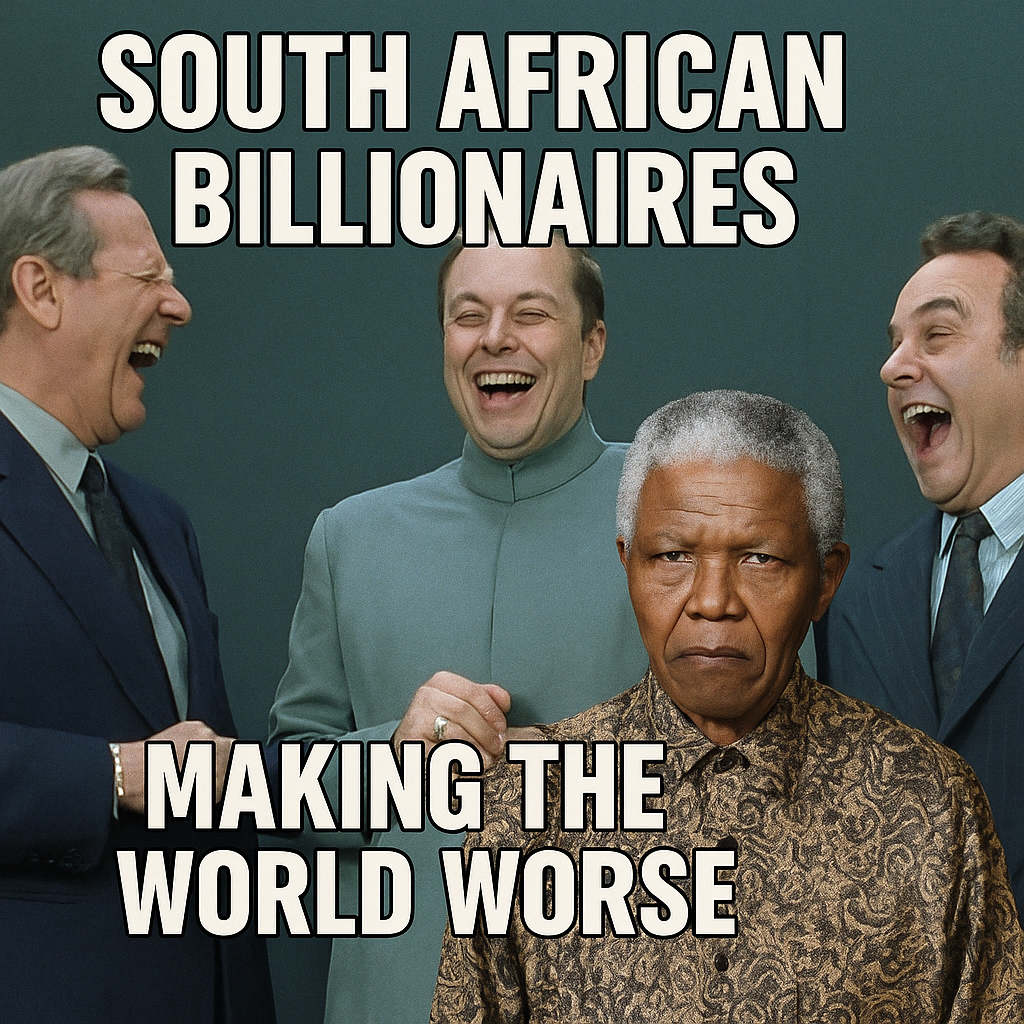
Individuals like Elon Musk and Patrick Soon-Shiong. Sergey Brin was technically born in Moscow but was raised partly in SA post-emigration. Their success stems from a complex interplay of factors, not a direct result of apartheid itself, but shaped by the unique circumstances surrounding it and their subsequent move to the US:
- High-Quality (but Segregated) Education & Technical Skills:
- Apartheid-era South Africa invested heavily in high-quality education, science, and engineering for the white minority. This created a small but highly skilled pool of graduates, particularly in fields like engineering, mining, medicine, and computer science.
- This rigorous technical foundation offered essential skills. These skills are needed to excel in technology, finance, and innovation-driven industries in the US.
- Exposure to Adversity & Instability:
- Growing up or operating in the turbulent final decades of apartheid fostered resilience and adaptability. The uncertain transition period developed problem-solving under pressure and a high tolerance for risk. These are essential entrepreneurial traits.
- Witnessing systemic inefficiencies and inequalities might have sparked a drive to build better systems or find innovative solutions.
- Entrepreneurial Culture within Constraints:
- Operating within the isolated and constrained apartheid economy (due to sanctions) required resourcefulness. Entrepreneurial thinking was essential to navigate limitations and find opportunities. This bred a specific kind of business acumen.
- Some families had existing business backgrounds within that system.
- Motivation to Leave & Seek Opportunity:
- Many highly skilled white South Africans left due to:
- Opposition to Apartheid: Moral objections to the regime.
- Political/Economic Uncertainty: Fear of instability during the transition and concerns about the future post-apartheid (crime, economic policies, affirmative action).
- Pursuit of Larger Markets & Capital: Recognizing the limitations of the South African market. There are vastly greater opportunities and access to venture capital in places like the US. This is especially true in tech and finance.
- “Brain Drain”: The emigration of skilled professionals seeking better prospects and stability elsewhere.
- Many highly skilled white South Africans left due to:
- Timing and Sector Choice:
- Many of the most prominent examples (Musk, Brin) emigrated during the rise of the digital revolution (late 80s/90s). They possessed the necessary skills in engineering and computer science. This was exactly when they were needed. They placed themselves at the epicenter of that revolution (Silicon Valley).
- Choosing high-growth, high-impact sectors like tech (PayPal, Tesla, SpaceX, Google), biotech (Soon-Shiong), or disruptive finance significantly increased their potential upside.
- The Power of the US Ecosystem:
- Access to Capital: The US, particularly Silicon Valley, has unparalleled access to venture capital. Angel investors are willing to fund high-risk, high-reward ventures.
- Massive Market: The US offers a huge, wealthy, homogeneous market ideal for scaling businesses rapidly.
- Culture of Innovation & Risk-Taking: The US actively celebrates entrepreneurship. It tolerates failure as a learning step. The country has a deep culture of technological innovation.
- Network Effects: Being in hubs like Silicon Valley provides access to talent, mentors, and partners. It also offers access to customers in a way few other places can match.
- Strong Institutions: Reliable (though complex) legal systems, property rights, and financial markets provide a stable foundation for building large businesses.
- Individual Genius, Drive, and Vision:
- Ultimately, achieving billionaire status requires exceptional individual talent. It also requires relentless drive, strategic vision, and often, a significant element of luck or timing. The factors above created fertile ground, but the individuals themselves possessed extraordinary capabilities.
Important Nuance:
- Not a Monolith: Not all white South Africans who emigrated became billionaires. These are exceptional outliers. Most became successful professionals or businesspeople within a normal range.
- Privilege vs. Drive: While apartheid provided a privileged education to this group, it is inaccurate to attribute their US success solely to that privilege. This viewpoint is dismissive of their individual achievements. It was a starting point, amplified by the US ecosystem and their own abilities.
- Opposition vs. Benefit: Many successful emigrants actively opposed apartheid (like Musk’s stated reasons for leaving). Their success shouldn’t be seen as a direct benefit of apartheid. Instead, they succeeded despite or in reaction to its negative environment. They leveraged the skills they acquired, which were a product of that unequal system, in a more open market.
In essence: Apartheid created a small, highly educated, technically skilled, and often resilient cohort within the white minority. Political and economic pressures played a significant role. The allure of vastly larger opportunities also contributed. These factors motivated many of the most ambitious and talented within this group to emigrate, particularly to the US. There, their skills met the most fertile ground in the world for scaling innovative businesses. Their entrepreneurial drive was forged in adversity. Their timing often caught the tech wave. They had access to massive capital, huge markets, a supportive culture, and powerful networks. Their success is a product of this unique confluence, not apartheid itself.