
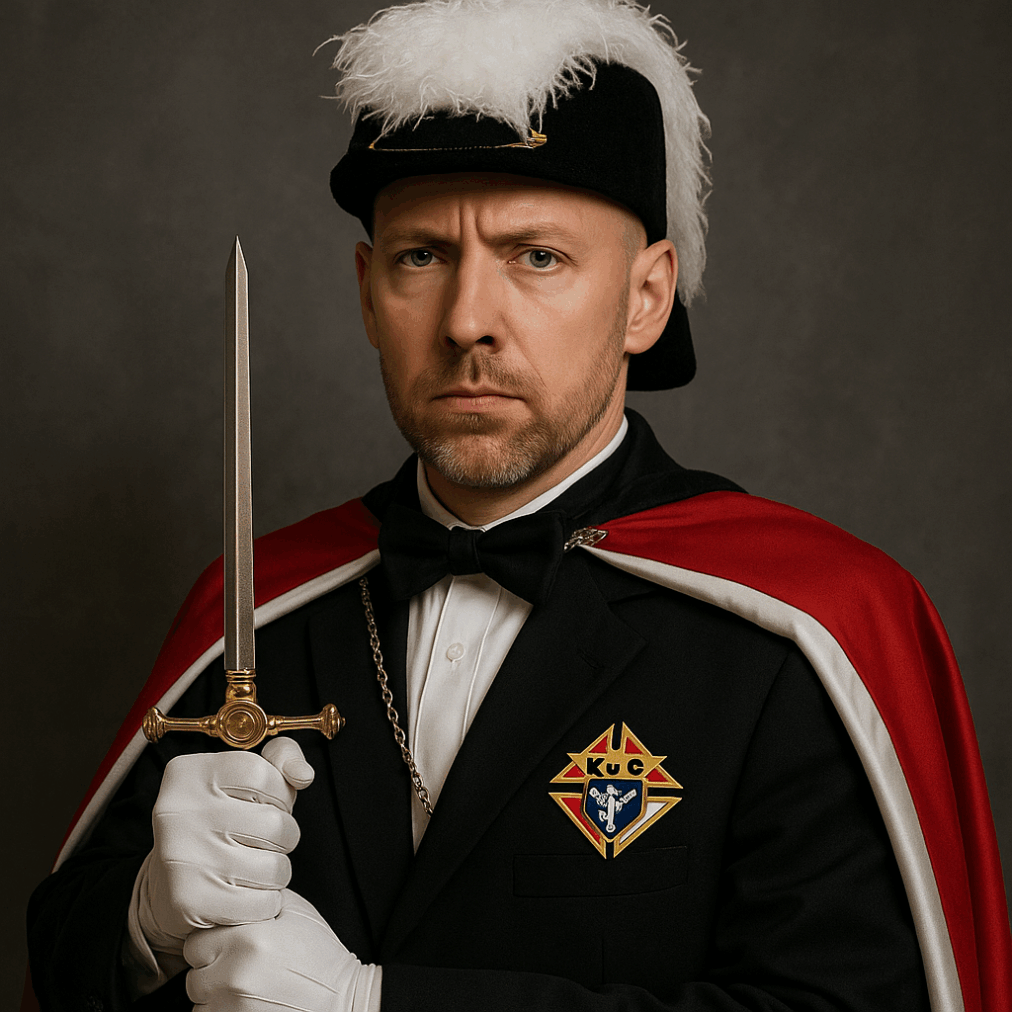
The Knights of Columbus and Christopher Columbus: A Catholic Legacy Under Scrutiny
Faith, fraternity, and a complicated namesake—served magazine-style, with a wink.
Faith, Fraternity, and a Complicated Namesake
The Knights of Columbus are among the most recognizable Catholic fraternal orders in the world. Founded in 1882 in New Haven by Father Michael J. McGivney, the Knights began as a mutual-aid society for Catholic men facing discrimination. It was part insurance program and part spiritual brotherhood. The organization was fully committed to charity and service. (Think “food drive with blazers.”)
But their chosen namesake—Christopher Columbus—now sails in rougher cultural waters. A question follows every parade banner. Do the Knights’ good works get tangled in Columbus’s documented role in enslavement and colonization?
Why the Knights of Columbus Chose Columbus
In the late 19th century, U.S. Catholics—especially Irish and Italian immigrants—were often branded “un-American.” Adopting Columbus as patron was a strategic PR masterstroke:
- A Catholic explorer already woven into the American founding myth.
- A symbol tying Catholic identity in America to national pride.
- A way to say: We belong here—not just in pews, but in the story of the nation.
In short, Columbus functioned as an emblem of belonging, not a blanket endorsement of every act attributed to him. Branding before branding was cool.
The Shadow of the Slave Trade
Modern historians and Indigenous perspectives have sharpened the record. Columbus’s governance in the Caribbean included forced labor regimes. It also involved violence and the enslavement and trafficking of Indigenous peoples. That reality complicates any simple