
The Democratic primary for Michigan’s U.S. Senate seat highlights distinct approaches within the party, with U.S. Representative Haley Stevens and former Detroit Health Director Dr. Abdul El-Sayed offering different backgrounds, policy priorities, and campaign strategies.
Rather than declaring one candidate objectively “better,” evaluating a candidate depends heavily on a voter’s priorities regarding foreign policy, campaign finance, healthcare, and legislative strategy.
Key Differences Between the Candidates
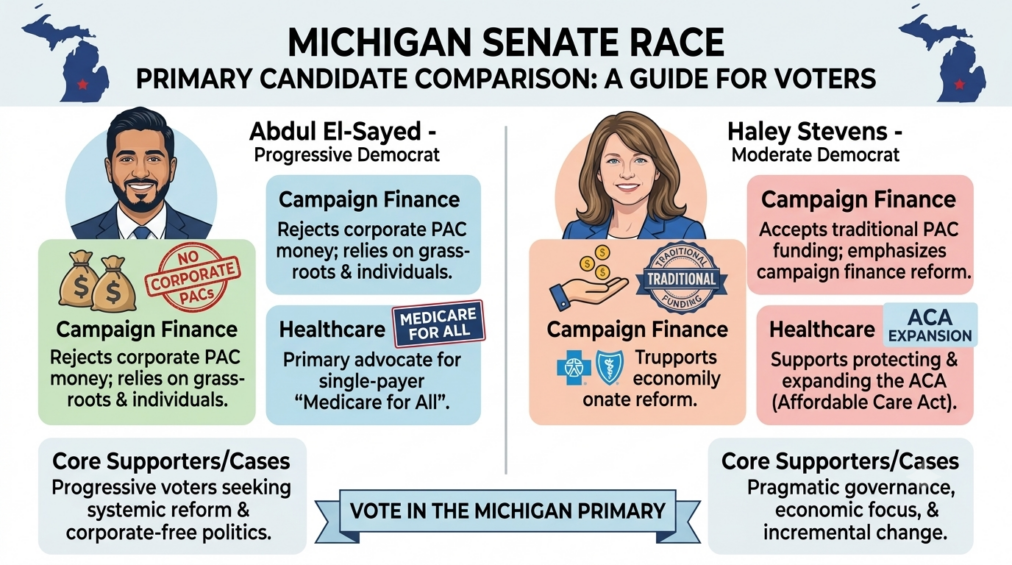
The Case for Abdul El-Sayed
Supporters of Dr. El-Sayed generally align with his progressive platform and anti-corporate messaging:
- Foreign Policy Accountability: Critics of current U.S. policy toward Israel view El-Sayed as a crucial voice for Palestinian human rights and for conditioning U.S. foreign aid, contrasting his position with establishment platform norms.
- Rejecting Corporate Influence: El-Sayed makes his refusal of corporate PAC money a central pillar of his platform, arguing that politicians who accept corporate funds are beholden to special interests rather than working-class voters.
- Systemic Policy Reforms: He champions structural changes such as Medicare for All, aggressive climate legislation, and wealth taxes, appealing to voters looking for transformative policy rather than incremental updates.
The Case for Haley Stevens
Supporters of Representative Stevens emphasize her legislative track record and pragmatism:
- Established Record in Congress: Stevens highlights her experience in the House of Representatives and her work on manufacturing, supply chains, and local economic development in Michigan.
- Pragmatic Governance: Her campaign appeals to moderate and mainstream Democratic voters who prefer building on existing programs—like expanding the ACA—and who value coalition-building across party lines.
- Foreign Policy Approach: Supporters view her commitment to traditional alliances, including the U.S.–Israel relationship, as a steady approach to international security and regional stability.
Ultimately, voters who prioritize firm stances against corporate PAC money and strong critiques of U.S. policy in the Middle East often lean toward El-Sayed. Conversely, voters prioritizing congressional experience, legislative pragmatism, and traditional party alliances tend to favor Stevens.