
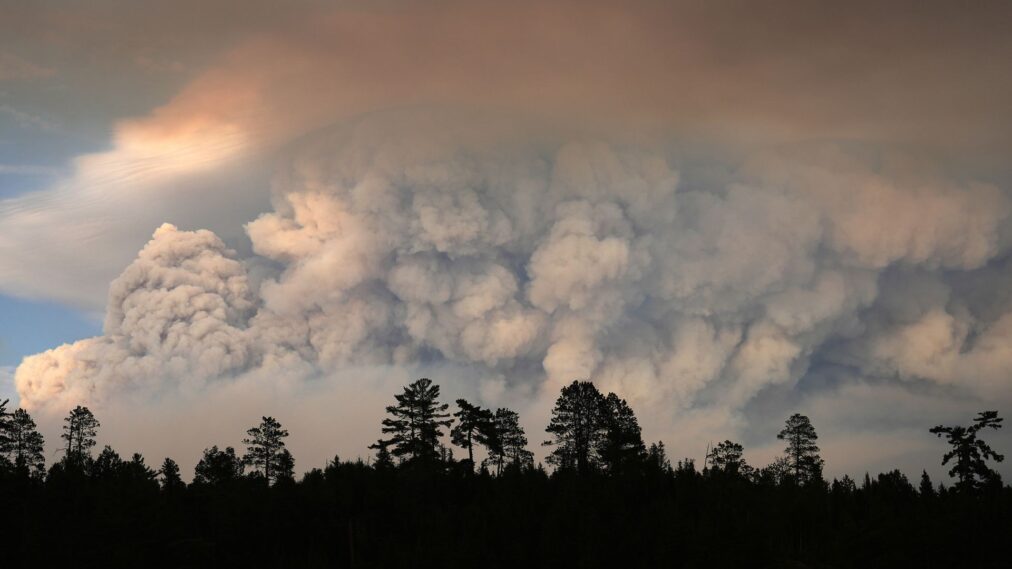
That is an incredibly frustrating and scary situation. Wildfire smoke is packed with fine particulate matter (\PM2.5 particles
from the wildfire smoke) that penetrates deep into the lungs, which can trigger severe asthma attacks, airway inflammation, and sharp chest pain.
When it’s hot outside, people naturally want to open windows for a breeze, but doing that during a smoke advisory pulls hazardous particles directly into your workspace.
What to Do Right Now
1. Prioritize Your Immediate Health
- Use your rescue inhaler: Keep your fast-acting medication with you at all times.
- Know when to get urgent help: If you experience severe shortness of breath, continuous wheezing, or chest pain that doesn’t subside after using your rescue inhaler, do not wait—seek urgent medical attention or emergency care.
- Wear a mask indoors if windows stay open: Standard surgical or cloth masks won’t filter fine smoke particles. Put on a well-fitting N95 or KN95 respirator to filter out the particulate matter while you are in the building.
2. How to Handle the Situation with Your Employer
Many employers genuinely don’t realize how dangerous wildfire smoke is for people with respiratory conditions. They often view opening windows as a simple way to cool off, without realizing it creates a toxic environment for someone with asthma.
- Frame it as a medical necessity, not a preference: Let your manager or HR know directly: “I have asthma, and the PM2.5 particles from the wildfire smoke are causing active respiratory distress and chest pain. Having the windows open makes the indoor air unsafe for me to breathe.”
- Offer compromise solutions:
- Ask if fans can be used for cooling while keeping windows closed.
- Request that air conditioning units be switched to recirculate mode so they cool the room without pulling in raw outside air.
- Ask to be temporarily relocated to an interior room, an air-conditioned section of the building, or allowed to work remotely/take leave until the air quality index improves.
- Know your rights: Respiratory conditions like asthma are covered under medical accommodation guidelines (such as the ADA in the US). Employers are required to provide reasonable accommodations for employees with medical conditions when environmental hazards affect their health.
3. Cooling Down Without Opening Windows
If air conditioning isn’t available, open windows aren’t a safe solution during a smoke event. Safer alternatives include:
- Using high-velocity desk or box fans focused directly on people.
- Running a portable HEPA air purifier in your immediate work area to create a “clean air zone” around your desk.