
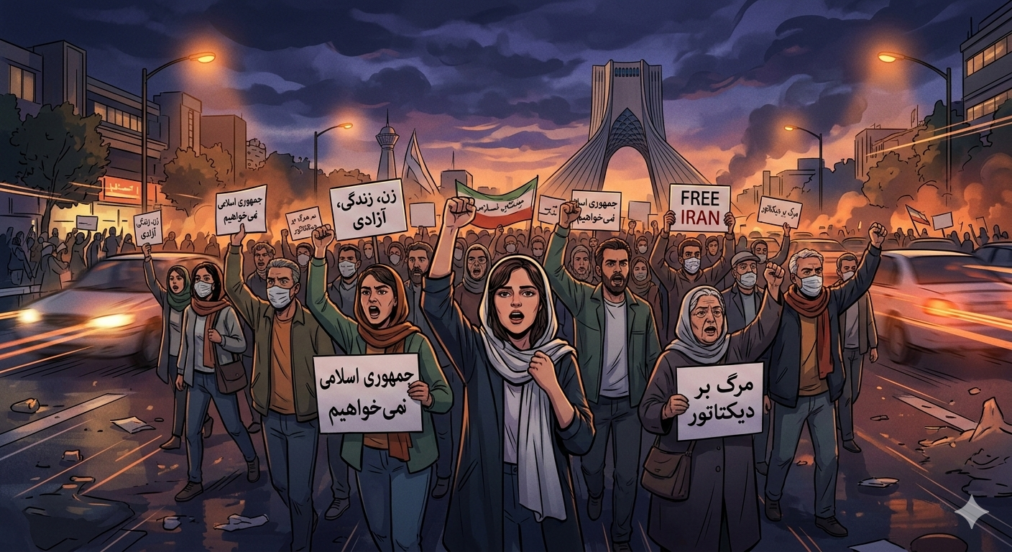
To understand the religious landscape of Iran in 2026, it is helpful to distinguish between the country’s official constitutional framework. It is also helpful to consider the lived reality of its citizens. While the government presents a monolithic Islamic identity, the population is increasingly diverse and, in many cases, secular.
1. The Official State Religion
Iran is an Islamic Republic where Twelver Shia Islam is the official state religion.
- Government Statistics: Official data often claims that over 99% of the population is Muslim.
- The Reality: Independent surveys (such as those by GAMAAN) suggest a massive shift toward secularism. Recent data indicates that 40–60% of Iranians may identify as irreligious. They might also consider themselves atheist or agnostic. This is despite being labeled “Muslim” on official documents by birth.
2. Recognized Religious Minorities
The Iranian Constitution (Article 13) officially recognizes only three non-Islamic religions. These groups are allowed to practice their faith “within the limits of the law” and have reserved seats in the Parliament (Majlis):
- Christians: Primarily ethnic Armenians and Assyrians. While they have protected status, they are forbidden from proselytizing or holding services in Farsi (Persian).
- Jews: Iran is home to one of the oldest Jewish communities in the Middle East. While they are constitutionally protected, they often face pressure to distance themselves from Zionism and Israel to ensure their safety.
- Zoroastrians: Practitioners of Iran’s ancient pre-Islamic faith. They are respected as a historical part of Iranian identity. However, they still face systemic barriers to high-level government or military positions.
3. Unrecognized and Persecuted Groups
Groups not mentioned in the Constitution have no legal standing and face severe state-sponsored discrimination:
- Baha’is: The largest non-Muslim minority in Iran, yet the most heavily persecuted. The state views the Baha’i Faith as a “heretical sect.” Baha’is are frequently barred from universities, have their businesses shuttered, and face arbitrary imprisonment.
- Sunni Muslims: While they are Muslims, Sunnis (mostly among ethnic Kurds, Baluchis, and Turkmen) face systemic discrimination. They are largely excluded from high political office. They have historically struggled to gain permission to build mosques in major cities like Tehran.
- Christian Converts: Unlike “ethnic Christians,” those who convert from Islam to Christianity are not recognized. They often meet in “house churches.” They face charges of “apostasy” or “actions against national security,” which can carry the death penalty.
- Yarsanis (Ahl-e Haqq): A syncretic religious group primarily among Kurds. They are not recognized and often face pressure to identify as Shia Muslims to access basic rights.