
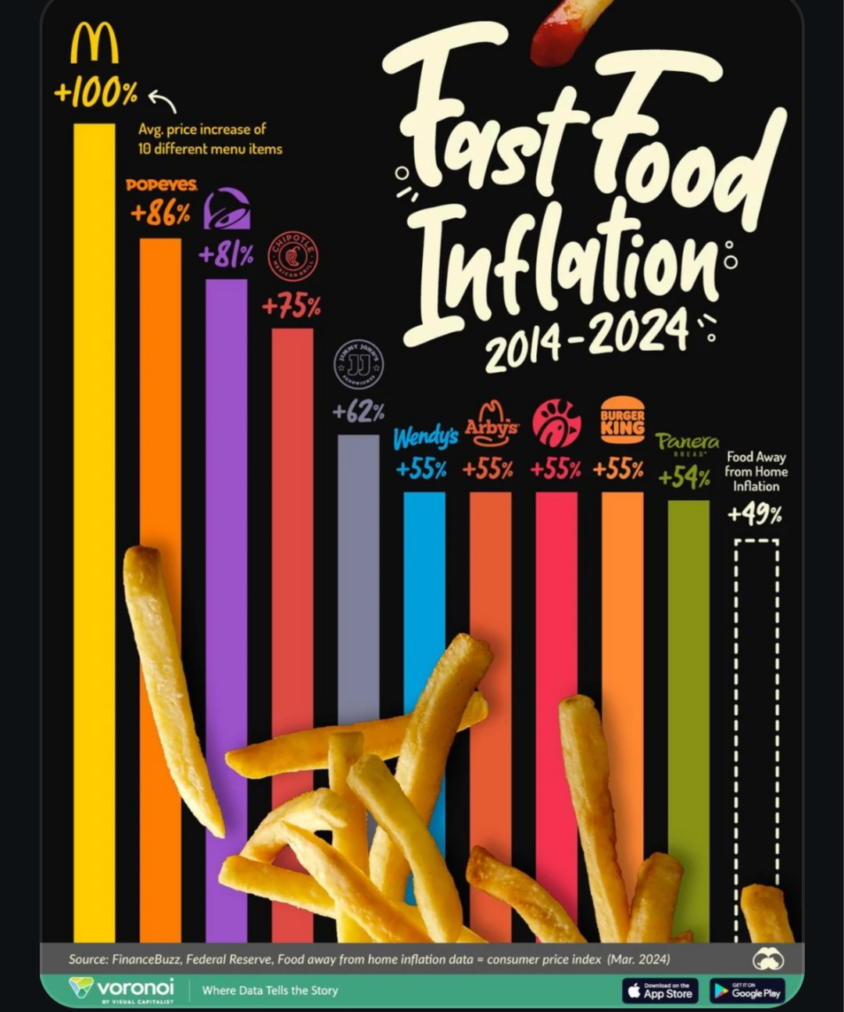
The era of the reliable $1 or $2 fast food meal has essentially vanished, replaced by menu prices that often rival casual sit-down dining. Fast food prices outpaced broader Consumer Price Index (CPI) inflation by a wide margin, with menu prices at major chains rising anywhere from 50% to over 100%.
Key Drivers of Rising Prices
1. Labor Costs and Minimum Wage Laws
Fast food relies heavily on entry-level labor. Competition for workers, paired with policy changes—such as minimum wage increases in major markets like California ($20/hour for fast-food workers)—has significantly raised payroll expenses. Chains pass those operating costs directly to menu boards.
2. Supply Chain and Commodity Costs
The core ingredients of fast food—beef, poultry, cooking oils, paper packaging, and potatoes—experienced sharp cost surges due to global supply chain disruptions, extreme weather events, and agricultural inflation.
3. The Shift to Digital Pricing & Mobile Apps
Fast food corporations have restructured their pricing strategies:
- The “App Tax” on Cash/Counter Customers: Chains moved their best deals, rewards, and dollar-style promotions exclusively into mobile apps. In-person counter prices are intentionally kept higher to push consumers into digital ecosystems, where companies can collect valuable customer data.
- Algorithmic & Dynamic Pricing: Digital menu boards allow chains to adjust prices far more frequently based on regional demand, local income levels, and supply chain inputs.
4. Franchise Model Dynamics
Most major chains (McDonald’s, Burger King, Subway) are roughly 90%+ franchised. While corporate parent companies profit off transaction volume and royalties, individual franchise owners deal directly with thin operating margins. When labor and food costs rise, franchisees push back against low-margin “Value Menus” to keep their locations profitable.
How Chains Are Responding
After facing pushback from consumers pulling back on dining out, major chains began testing strategic retreats—reintroducing temporary $5 Value Meals and targeted app discounts to regain foot traffic. However, these are largely promotional bandage fixes rather than a permanent return to baseline cheap prices.