Hugo Boss’s connection to the Nazi era is well-documented. During the 1930s and 40s, the company produced uniforms for the SS, SA, and Hitler Youth. They also made uniforms for other branches of the regime. Those designs were sharp, militaristic, and authoritarian in style—dark tones, structured tailoring, strong shoulders, high collars, and sleek silhouettes.
Today, Hugo Boss is a global fashion brand with no ties to fascism. Some stylistic echoes remain because the company built its reputation on tailoring. Here’s where you’ll see similarities and differences:
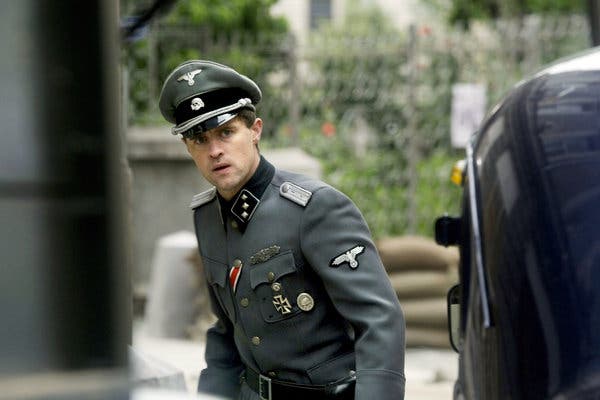
- Tailoring & Structure
Then (1930s–40s): Military uniforms emphasized rigid structure: broad shoulders, cinched waists, sharp lapels, and clean lines. These were designed to project authority, discipline, and intimidation.
Now: Hugo Boss suits often retain these elements—structured shoulders, slim waists, and minimalist cuts. The company’s menswear is renowned for its precision tailoring. It projects confidence and power in a corporate sense rather than a military one.
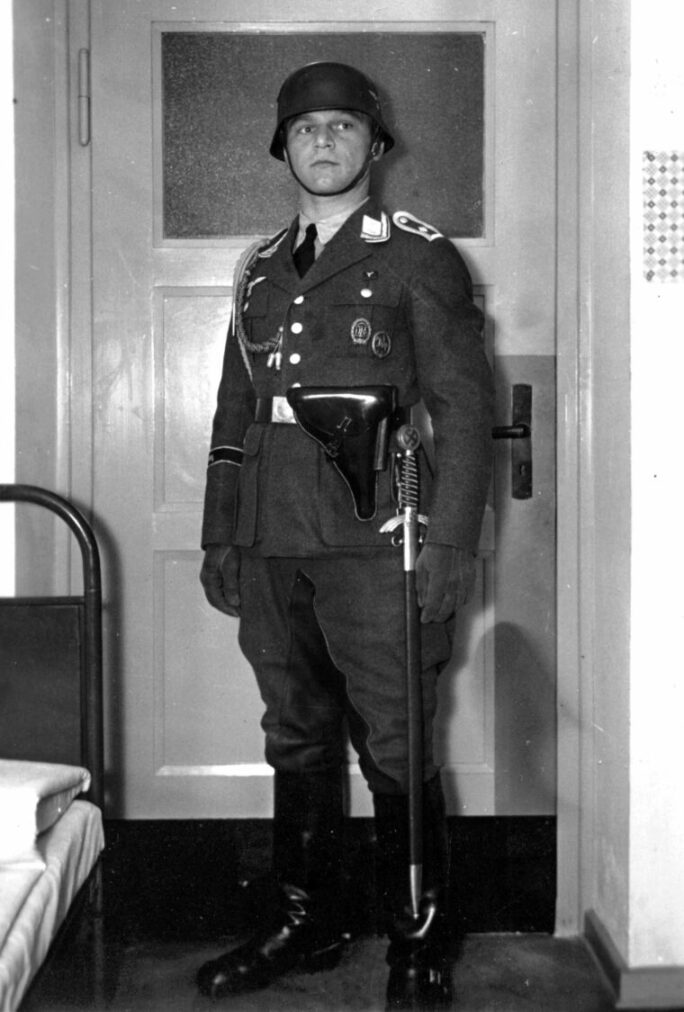
- Color Palette
Then: Predominantly black, gray, field green, and brown—standard military colors that reinforced hierarchy and uniformity.
Now: Boss suits frequently lean on neutral palettes (black, navy, gray), which carry an echo of that severity. While they also design in lighter tones and casual wear, their “power suit” aesthetic focuses heavily on these restrained colors. It relies on monochrome palettes.
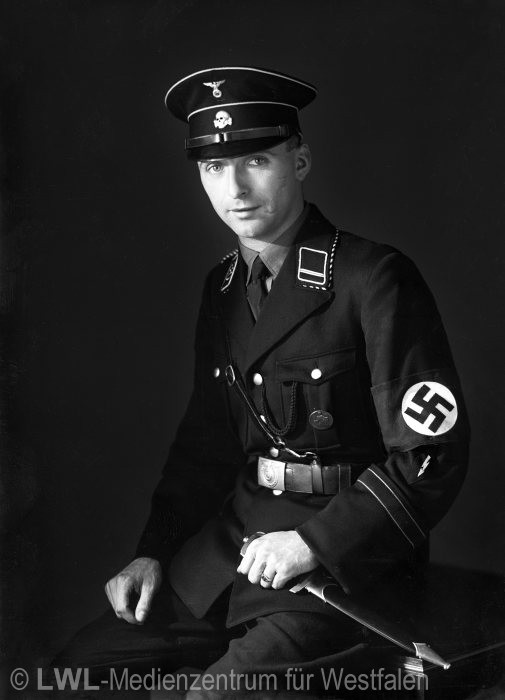
- Minimalist Design
Then: Nazi uniforms avoided ornamental excess—clean, disciplined aesthetics matched the regime’s ideology of order.
Now: Modern Hugo Boss designs often emphasize minimalism: unadorned jackets, understated branding, sharp lines. The emphasis is on form and silhouette over decoration, which parallels the stripped-back uniform aesthetic. - Symbolism vs. Branding
Then: The uniforms were inseparable from political symbols (swastikas, SS runes, insignia). The cut of the clothes reinforced authority but their meaning came from context.
Now: Hugo Boss clothing no longer carries political symbols. Branding is subtle. There may be a small logo or none at all. Clothing as a projection of authority and confidence still resonates psychologically. - Cultural Associations
Then: The uniforms became infamous for their intimidating elegance. Some historians call them “seductively fascist” because they projected a dark glamour.
Now: Hugo Boss suits are marketed as boardroom armor. Clothes that embody dominance, discipline, and control still link the old uniforms with today’s business suits. They are stripped of ideological baggage.
✅ Bottom Line:
Hugo Boss today does not design Nazi-style uniforms. But their modern collections—especially suits—still carry echoes of that era. This is evident in their structured tailoring, dark minimalist palettes, and authoritarian chic aesthetic. What was once used to project fascist power is now rebranded as corporate power dressing.
Would you like me to put together a visual side-by-side comparison (1930s uniforms vs. modern Hugo Boss suits) to really show the stylistic continuity?