
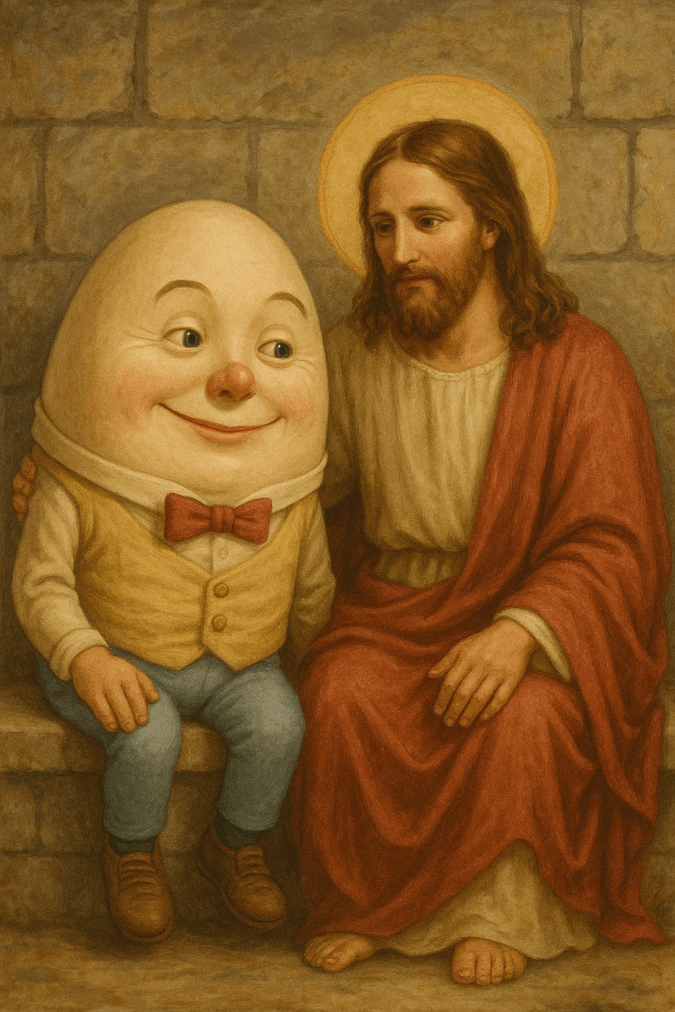
- The Fall
Humpty Dumpty: Defined by the fall. He was high up, he fell, and he broke. His story is short and fatalistic—once fallen, all the king’s horses and men can’t put him back together again.
Jesus Christ: Also associated with a fall, but in reverse. He steps down from divinity into humanity (the Incarnation), suffers, and dies. His “fall” is not an accident, but a choice. - The Aftermath
Humpty: His fall ends in irreparable brokenness. No redemption, no return. The story is a warning: fragility + pride + height = disaster.
Jesus: His “fall” (death) is followed by resurrection. Where Humpty is left shattered, Jesus is restored—more than restored, he transcends. His brokenness leads to wholeness for others. - Symbolism of Wholeness
Humpty: Represents the fragility of life. It signifies the inevitability of collapse. It also highlights the limits of human power (even kings can’t fix him).
Jesus: Represents the opposite—wholeness out of brokenness, healing from wounds, and divine power doing what no human effort could accomplish. - Narrative Purpose
Humpty Dumpty: A nursery rhyme with no redemption arc. Its purpose is cautionary, almost nihilistic—when you break, you break.
Jesus Christ: A Gospel narrative of hope, renewal, and restoration. Its purpose is salvific—when you break, there is healing and new life. - The Inversion
In a way, Jesus is the anti-Humpty Dumpty.
Humpty: Falls → Shattered → No return.
Jesus: Falls (dies) → Broken → Restored (and brings restoration to others).
👉 So if you wanted to boil it down:
Humpty Dumpty is the story of inevitable ruin.
Jesus Christ is the story of brokenness transformed into eternal life.
Would you like me to rewrite this in a snarky magazine-style voice? I can do it like a Rolling Stone article comparing a nursery rhyme egg to the Son of God. Or should I keep it straight and symbolic?