
The End of Children?
How the world is having fewer babies—and why it matters
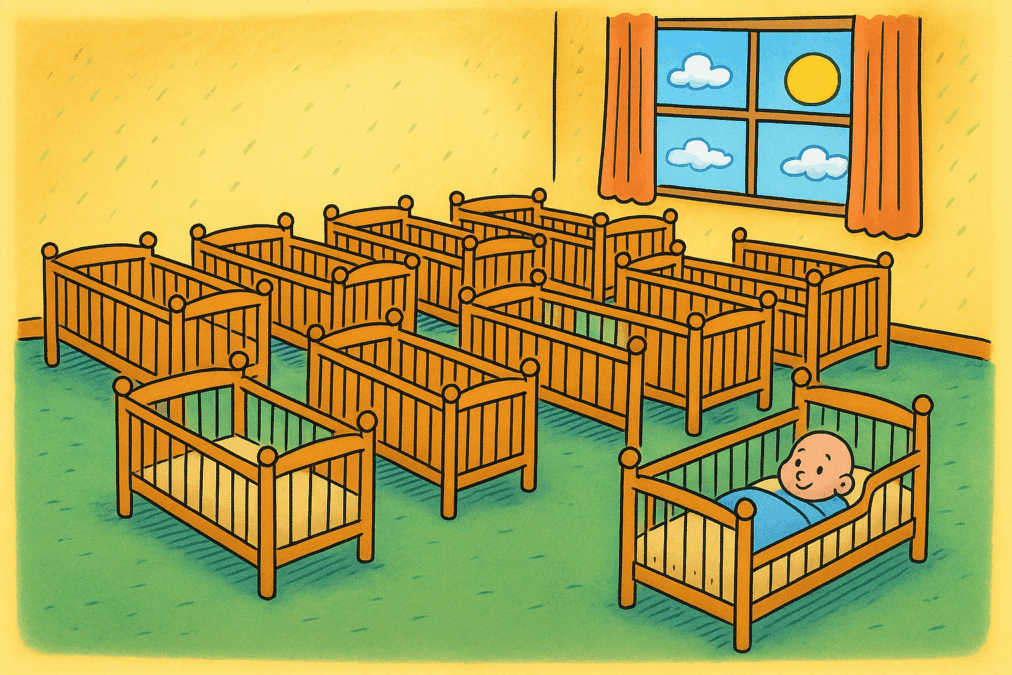
Around the globe, something once considered natural and inevitable is slowing down: people are having fewer children. Birth rates are falling in nearly every country, from the world’s richest nations to its emerging economies. While the global average in the 1960s hovered around 5.3 children per woman, by 2023 it had dropped to just 2.2. Today, countries like South Korea, Taiwan, Ukraine, China, and Italy report fertility rates well below replacement level. South Korea, in particular, has set a historic record, with an average of just 0.7 children per woman—unprecedented in modern history.
This isn’t just a demographic curiosity. It’s a global shift with profound consequences for economies, cultures, and the future shape of human society. Although many still express a desire to have children, more people report being unable to afford them. A recent United Nations Population Fund (UNFPA) survey was conducted in 14 countries. It found nearly one in five adults unable to have the number of children they wanted. The reasons? High living costs, expensive housing, unstable jobs, and a lack of childcare support. As Dr. Natalia Kanem of the UNFPA puts it, “The issue is lack of choice, not desire.”
Several key drivers lie behind the decline. In developed nations, women often delay marriage and childbirth until their thirties. Some even choose to forego parenthood altogether. Urbanization provides more options for people. Higher education levels and greater career opportunities also contribute to these choices. These factors have shifted child-rearing lower on the priority list. The soaring cost of living plays an enormous role as well. Housing, daycare, health insurance, and education expenses weigh heavily on family planning decisions. In cities across Europe, North America, and East Asia, many young adults struggle to imagine raising even one child. Raising two or more children seems even more challenging.
There’s also a quiet cultural revolution underway. Across much of the developed world, attitudes have shifted. Personal fulfillment, career ambition, and individual freedom are often valued more than traditional family life. This marks a break from earlier generations, where children were seen as both a duty and a blessing. Now, the calculus is different. Parenthood is increasingly viewed as optional, even burdensome. Anxiety about the future—from climate change to political instability—only adds to the hesitation.
This trend isn’t limited to wealthy nations. Latin American countries like Brazil, Chile, and Mexico have seen dramatic drops in fertility rates. This mirrors the trajectory of the West. Even in parts of Africa, fertility rates have traditionally been high. However, the numbers are declining. This decline is especially noticeable in cities, among educated women, and in wealthier communities. While Africa still holds the highest regional birth rates, the gap is closing faster than many anticipated.
The consequences of this demographic shift are staggering. An aging population means fewer working-age people to support retirees, increasing strain on pensions, healthcare systems, and economies. Labor shortages are already being felt in sectors like eldercare, education, and manufacturing. Slower population growth also translates into weaker consumer demand and economic sluggishness. Some nations are responding with cash incentives, tax breaks, and generous parental leave programs. However, most of these efforts have done little to reverse the trend.
Demographers have long assumed that birth rates would eventually rebound. But in recent years, those assumptions have been challenged. Fertility projections routinely overshoot reality. Even countries with strong family policies—like Sweden and France—struggle to push their numbers above replacement. At this point, no industrialized country has sustained a birth rate over 2.1 without significant immigration. The United States, once an outlier with relatively high fertility, now hovers around 1.6 children per woman—the lowest ever recorded.
Where does this leave us? Some experts argue that a smaller global population might benefit the planet, easing environmental strain and reducing carbon emissions. Others warn of economic stagnation and declining innovation in a world without enough youth. The truth is, no one knows exactly how this story ends. One thing is clear: the great demographic reversal is already underway. It will reshape everything. This includes the way we work and age and the very idea of what a “normal” life looks like.
The era of exponential population growth is over. The future belongs to nations—and individuals—willing to rethink what it means to build a life. They must also reconsider how to raise a family and carry on the human story.