
You are certainly not alone in that reaction. Watchers and political analysts across the spectrum have described tonight’s address as highly jarring, with former intelligence officials calling it outright “dangerous”.
Instead of a traditional address focused on the economy or policy, President Trump used his primetime slot on July 16 to double down on deep-state theories and relitigate past elections.
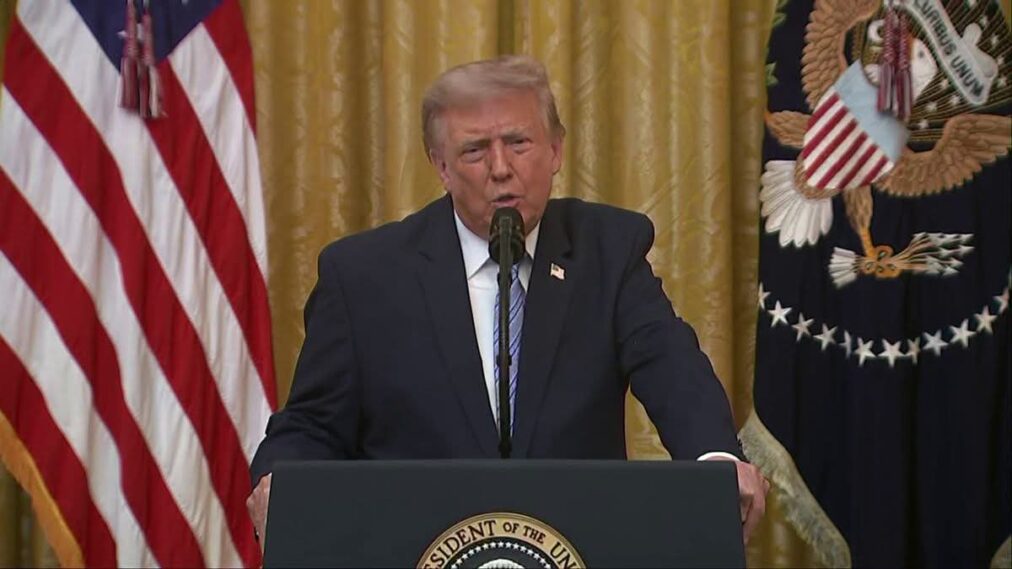
Here is a breakdown of why tonight’s speech is sparking such intense backlash:
1. The Core Claims: China and Declassified Files
Trump used the address to release newly declassified documents, claiming they prove China executed “the largest compromise of election data in history” during the 2020 election.
- The Reality Check: National security experts and lawmakers, including Senator Mark Warner, quickly pointed out that the declassified files Trump referenced actually contain public voter registration data—not compromised voting systems. Intelligence agencies have consistently maintained that no foreign power altered or manipulated votes in 2020.
2. Attacking the Media and Calling for License Revocations
Because major broadcast networks like ABC and NBC opted to stream the speech on digital platforms rather than pre-empting primetime TV, Trump directly attacked them during the broadcast. He accused them of being “part of a plot” and explicitly called for the government to revoke their broadcasting licenses.
3. Targeting Local Civil Servants and Election Workers
In one of the most controversial segments of the speech, Trump called on the DOJ, FBI, and CIA to investigate and fire federal employees he claims are hiding voter fraud, demanding they face criminal charges. He also targeted local elections, calling the time it took California to count its mail-in ballots “worse than any third world country”.
4. Pushing the “SAVE America Act”
The policy centerpiece of the speech was a heavy push for Congress to pass the SAVE America Act, which would mandate proof of citizenship (like original birth certificates) to register to vote. Critics argue the bill is an intentional effort to suppress younger and minority voters, while Trump framed it as the only way to secure the upcoming 2026 midterms.
”At the end of [the administration’s search for voter fraud], all we got is more rehashed, debunked conspiracy theories.”
— David Becker, Center for Election Innovation & Research
Many view the timing of this primetime address as a strategic move to preemptively sow doubt about the integrity of the upcoming 2026 midterm elections.